
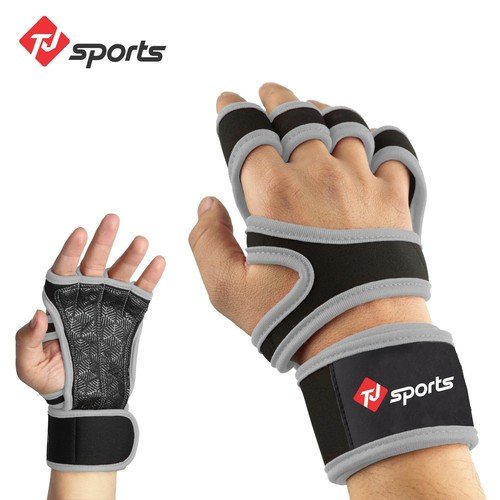
If your hands are covered in calluses, your grip gives out before your muscles do, or you’re wiping sweat off the bar between sets, it might be time for a pair of workout gloves. They’re not essential for everyone, and they’re not a magic fix — but for many lifters, the right pair solves a handful of small, annoying problems that get in the way of a good session. Here’s how to tell if you’re one of them, and what matters when choosing a pair.
When Workout Gloves May Be Useful
Gloves earn their place in a gym bag for practical reasons, not because every lifter needs them. A few common situations where they tend to help:
Building calluses faster than you’d like. Pulling movements — deadlifts, rows, pull-ups, lat pulldowns — put repeated friction across the same small patches of skin, and every so often one tears mid-set. A glove or pad adds a layer between skin and bar, which many lifters find cuts down on this.
Grip giving out before your muscles do. If you’re racking a set early because your hands are sliding, not because the target muscle is cooked, grip is the bottleneck — a textured palm makes it easier to hold on, particularly on high-rep sets.
Sweaty palms on the bar. Some lifters manage this with chalk, but it isn’t allowed everywhere and it makes a mess — a grippy palm is a tidier alternative.
New to lifting. Without any callus built up yet, the first few weeks under the bar can be uncomfortable, and gloves can smooth out that adjustment period.
Mixed training styles. Moving between barbell work, dumbbells, kettlebells, and cable machines in one session puts hands through a lot of different contact, and a glove that handles grip and comfort across all of it simplifies things.
None of this makes gloves compulsory — plenty of experienced lifters train bare-handed and are perfectly happy. It just means if one or more of the above sounds familiar, gloves are worth trying.
Calluses, Grip, Sweat, Comfort, and Training Type
These are related but not identical problems, and the right glove features depend on which one is bothering you.
Calluses and comfort come down to how much padding sits over the areas of your palm that take the most contact — the base of the fingers and the palm’s ridge. More padding means more buffer, though very thick padding can reduce how much you “feel” the bar, which some lifters don’t love for heavier compound lifts.
Grip is mostly about the palm surface — silicone print or textured patches add friction against a smooth barbell or dumbbell handle, particularly once hands start to sweat.
Sweat and heat are a breathability issue. A glove that’s all dense padding with no airflow can leave hands hotter and sweatier than wearing nothing — mesh panels on the back of the hand are the usual fix.
Training type matters too. Heavy, low-rep barbell work favours a snugger, simpler glove for good bar feel; higher-rep or mixed sessions — circuits, kettlebells, pull-up work — often suit a glove with solid grip and a bit more room to move.
When Gloves May Not Be Necessary
Gloves aren’t the right call for everyone. With already calloused, conditioned hands and a comfortable grip, there may not be much a glove adds. Some lifters also find a bulkier glove interferes with feeling exactly where the bar sits, which matters more on technical lifts like Olympic-style movements. And if your gym allows chalk and you’re happy using it, that solves the sweat-and-grip problem without gloves.
There’s no rule that says you need gloves just because you’ve started lifting — it’s personal preference. If your hands feel fine and grip isn’t limiting your sets, you don’t need to add anything.
How to Choose Gloves: What Actually Matters
Once gloves seem worth trying, these features separate a pair you’ll keep using from one that ends up in a drawer.
Fit and Sizing
This is the one place it’s easy to get wrong. Too loose and the glove bunches up in your palm exactly where you need consistent contact; too tight and it can restrict circulation over a long session. Most size charts ask for hand circumference, measured around the widest part of the palm (excluding the thumb) with a soft tape measure — worth doing properly rather than guessing off your regular glove size, since sizing isn’t always consistent between brands.
Padding
Padding thickness is a trade-off: thin padding keeps you closer to the bar and preserves feel, which matters for heavy, technical lifts, while thicker padding cushions high-volume training but can make the bar feel further away. There’s no universally “right” amount — it depends what you’re training for.
Grip Material
Look at what’s actually on the palm. Silicone prints, textured rubber, or leather panels all add friction in slightly different ways. If you use chalk occasionally too, check the grip material doesn’t get slippery once chalk dust builds up.
Breathability
Check the back of the glove, not just the palm. Mesh or perforated panels let heat and moisture escape, which makes a real difference over a long session or in warmer weather — an all-dense glove with no ventilation will usually run hot.
Wrist Support
Some gloves include an extra strap around the wrist, separate from the main glove — a comfort and stability feature some lifters like during pressing movements. Treat it as a bonus, not the main reason to choose a glove, and not a substitute for a dedicated wrist wrap if you need one for a specific purpose.
Material and Durability
Common combinations include neoprene, leather, and synthetic blends. Leather tends to be more durable under heavy use; neoprene and synthetic blends are often lighter and more breathable. Check whether a pair is machine-washable, since that affects how easy it is to keep hygienic over months of use.
How to Care for Workout Gloves
Gloves see a lot of sweat, so basic care goes a long way. If a pair is labelled machine-washable, a cold, gentle cycle inside a mesh laundry bag (to stop velcro snagging other items) is usually safest — skip the fabric softener, and air dry flat rather than tumble-drying, which can affect padding and grip materials over time. Between sessions, airing gloves out rather than leaving them balled up in a gym bag helps them last longer and stops odour building up. Always check the specific care instructions on the product page or tag, since materials vary between styles.
A Short Buyer Checklist
Quick checks before you buy:
- Have you measured your hand and checked it against the size chart, rather than guessing?
- Does the palm material suit how you train — thin for bar feel, thicker for volume?
- Is there ventilation on the back of the hand, not just padding on the palm?
- Does the grip material still work if you occasionally use chalk?
- Is a wrist strap something you actually want, or an unnecessary extra?
- Are the gloves machine-washable, if hygiene and longevity matter to you?
Final Thoughts
Workout gloves aren’t a requirement for everyone who lifts, but if calluses, grip, or sweaty hands are getting in the way of training, a well-chosen pair can quietly fix all three. Fit, padding, grip material, and breathability matter most — get those right for how you train, and the rest tends to fall into place.
If you’re ready to have a look, TJ Sports’ range of gym gloves covers a few different styles for men and women, including the Ultimate Workout Gloves, which pair a leather-and-silicone grip palm with a mesh back and a velcro wrist strap.