
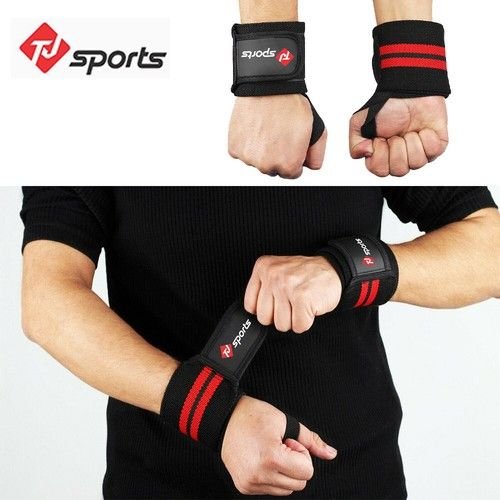
Wrist wraps are bands of supportive fabric you wind firmly around your wrists to keep the joint stable under heavy pressing loads. They act like an external brace, stopping the wrist from bending back too far during movements like the bench press and overhead press.
If your wrists ache after push day, or they feel wobbly when the weight gets serious, wraps are one of the simplest and cheapest upgrades you can make to your training. This guide covers what they do, when to wear them, how to put them on, and how to pick the right pair.
What Are Wrist Wraps?
Wrist wraps are bands of strong, slightly elastic fabric that you wrap firmly around your wrists and secure — usually with Velcro, sometimes with a tie closure. Most include a thumb loop that anchors the wrap in place while you wind it around the joint.
Their job is simple: stabilise the wrist. During pressing movements, your wrist sits under heavy load at an awkward angle, and it can bend back further than it should. Wraps act like an external brace, keeping the joint stacked and neutral so your pressing power transfers cleanly into the bar instead of leaking out through a wobbly wrist.
Good wrist wraps are made from heavy-duty elasticised cotton that holds its shape set after set. The TJ Wrist Wraps are 12 inches long (un-stretched), with a Velcro closure that lets you adjust tightness to your preference and a thumb loop to keep them anchored. They come as a pair — one for each wrist.
The Benefits of Wrist Wraps
Wraps won’t lift the weight for you, but they change how pressing feels in several meaningful ways.
A more stable wrist joint
This is the core benefit. When you bench press, the bar wants to fold your wrist backwards. A wrapped wrist stays stacked over the forearm bones, which is a stronger and safer position. You’ll notice the difference most on heavy sets, where even a small amount of wrist wobble makes the bar path unpredictable.
Less wrist pain after training
If you finish push day with sore, achy wrists, wraps reduce the strain on the joint during the session itself. Many lifters find that nagging wrist discomfort they’ve trained through for months quiets down once they start wrapping for their heavy pressing sets.
Better power transfer
Pressing power travels from your chest, shoulders and triceps through your wrists into the bar. A bent, unstable wrist is a leak in that chain — some of your force goes into stabilising the joint instead of moving the weight. A braced wrist keeps the chain rigid, so more of your effort goes where it counts.
Confidence under heavy loads
There’s a psychological side too. Knowing your wrists are supported lets you commit fully to heavy attempts instead of holding back. Lifters often find their bench press feels more solid from the very first wrapped set.
When to Use Wrist Wraps
Reach for wrist wraps on pressing days, particularly when:
- You’re bench pressing heavy. As the weight climbs, the bar tries to fold your wrist back. Wraps keep the joint stacked so the bar sits over your forearm bones, which is both stronger and safer.
- You’re overhead pressing. The overhead press puts the wrist in its most vulnerable position — directly under a heavy load with nowhere to hide. Wraps add meaningful stability here.
- Your wrists ache after pressing. If you finish push day with sore, cranky wrists, wraps reduce the strain on the joint and let you train without aggravating it.
- You’re doing high-volume pressing. Even moderate weights add up over dozens of reps. Wraps delay wrist fatigue across long sessions.
If wrist support during pressing is your main concern, wraps pair well with gloves that include built-in wrist support — read our guide on why gym gloves with wrist support help for heavy lifting for the full picture. And if you’re weighing up gloves themselves, our ultimate buying guide to gym gloves in Australia walks through the options.
When to Leave Them in Your Gym Bag
Wraps are a tool for heavy pressing, not an all-day accessory. Knowing when not to wear them matters just as much.
- Light warm-up sets. Your wrists need to learn to stabilise themselves. Wrapping for every set, including light warm-ups, means the joint never does its own stabilising work. Save the wraps for your working sets.
- Pulling movements. Deadlifts, rows and pull-ups load the wrist differently — the joint isn’t being folded back under a pressing load, so wraps add little. For pulling days, focus on grip with a solid pair of training gloves instead.
- Accessory and isolation work. Lateral raises, curls and tricep pushdowns don’t threaten the wrist the way heavy pressing does. Train these unwrapped and let the joint work naturally.
- When you’re learning the lifts. Beginners pressing light weights should build natural wrist strength and sound bar position first. Add wraps once the loads climb and the joint genuinely needs the help.
The rule of thumb: if the weight is heavy enough that your wrists are the weak link in a press, wrap up. Otherwise, let them work.
How to Choose the Right Wrist Wraps
Not all wrist wraps are equal. Here’s what separates good wraps from gym-bag clutter:
- Length. Longer wraps (around 12 inches or more) give more revolutions around the wrist, which means more support. Shorter wraps are quicker to put on and fine for moderate weights. For serious pressing, longer is better.
- Material. Heavy-duty elasticised cotton is the standard — it provides firm support while holding its shape over hundreds of sessions. Thin, flimsy fabric stretches out and stops supporting.
- Closure. Velcro closures are fast, adjustable and reliable: you decide exactly how tight the wrap sits. Tie-style closures take longer but some lifters prefer the locked-in feel.
- Thumb loop. A thumb loop anchors the wrap while you wind it, keeping it positioned correctly. It’s a small feature that makes a real difference in practice.
- Stiffness. Stiffer wraps give maximum support for heavy singles; more flexible wraps suit higher-rep training. Most lifters do well with a medium-stiffness all-rounder.
The TJ Wrist Wraps tick the key boxes: elasticised heavy-duty cotton, an adjustable Velcro closure, a thumb loop, and 12 inches of length for solid support. Browse more training gear in our gloves collection.
How to Put On Wrist Wraps
It takes a few sessions to get the technique down, but the process is straightforward:
- Loop your thumb through the thumb loop so the wrap hangs from the back of your hand.
- Wrap around the wrist joint, covering the wrist itself and slightly overlapping onto the base of the hand. Most lifters do 2–3 revolutions.
- Pull each revolution snug — firm enough to feel supported, not so tight your fingers tingle.
- Secure the Velcro and tuck or remove the thumb loop (many lifters slip it off once the wrap is secured, as competition rules often require this).
The wrap should feel like a firm handshake around your wrist: supportive, not painful. If your hands go numb, it’s too tight.
Common Mistakes to Avoid
- Wearing wraps for everything. Wraps are for heavy pressing, not every set. Wearing them for light warm-ups and accessory work means your wrists never learn to stabilise themselves. Use them when the weight warrants it.
- Wrapping too loose. A loose wrap is decoration. It should feel snug and supportive from the first revolution.
- Wrapping too tight. Cutting off circulation doesn’t add support — it just makes your hands numb. You should be able to feel your fingers normally.
- Using wraps instead of fixing technique. If your wrists hurt because the bar sits in your fingers instead of over your forearm, wraps mask the problem. Fix the bar position first, then add wraps for the heavy work.
- Buying the cheapest pair available. Paper-thin wraps stretch out within weeks and stop supporting. A well-made pair in heavy-duty cotton lasts hundreds of sessions.
Frequently Asked Questions
Do wrist wraps weaken your wrists?
Not when used sensibly. Wraps don’t weaken the joint — but wearing them for every set, including light warm-ups, means your wrists miss out on the stabilising work they’d otherwise do. Use wraps for heavy pressing and let your wrists work unassisted on lighter sets, and you’ll get the support without the downside.
Can beginners use wrist wraps?
Beginners can, but most don’t need to yet. Early on, weights are light enough that wrist stability isn’t the limiting factor, and it’s better to build natural joint strength first. Consider wraps once your pressing numbers climb and your wrists start feeling the load.
How tight should wrist wraps be?
Snug and supportive, never painful. You should feel the wrist firmly braced, with normal feeling in your fingers. If your hands tingle or go numb, loosen the wrap. Velcro closures make it easy to dial in the right tightness — wrap as tight or as loose as you want for the set ahead.
Should I get wrist wraps or gloves with built-in wrist support?
It depends on how you train. Standalone wraps give firmer, more adjustable support and are the better pick for heavy pressing. Gloves with integrated wrist support combine grip, palm protection and moderate wrist bracing in one piece — ideal if you want all-round hand protection. Many lifters own both and choose based on the session. Our guide to gym gloves with wrist support breaks down the glove option in detail.
How do I care for my wrist wraps?
Hand wash them in cold water with mild detergent and air dry — never put them in the dryer, as heat breaks down the elastic. Wash them every couple of weeks (or weekly if you train daily) to stop them getting stiff with dried sweat. A well cared-for pair keeps its support for a very long time.