Ask any regular rider what separates a great ride from a miserable one, and the answer usually isn’t the bike — it’s what’s underneath you. A well-built pair of men’s cycling shorts does the unglamorous work of keeping you planted, dry, and chafe-free for the whole ride, so you can actually enjoy the kilometres instead of counting down to when you can get off the saddle. Here’s what actually matters when you’re choosing a pair.
1. A Fit Built for the Way Men Ride
Men’s cycling shorts are cut differently to women’s for good reason. The rise, hip shaping and leg panels are proportioned around a typically flatter hip-to-waist ratio, so the fabric sits close to the body without bunching at the crotch or gaping at the waist when you’re leaning into an aggressive riding position. A fit that’s genuinely built for a man’s frame stays put through climbs, sprints and long steady efforts, rather than needing constant adjustment.
2. Chamois Padding That Matches Your Anatomy
The chamois is the single biggest factor in ride comfort, and men’s-specific pads are shaped and positioned differently to women’s to account for different pressure points and anatomy. A good chamois spreads your weight evenly across the saddle, holds its shape instead of flattening out an hour in, and stays anchored rather than sliding as you pedal. Cheap padding compresses fast and stops doing its job right when you need it most.
3. Matching Padding Thickness to Your Ride Length
The padding that’s perfect for a fast Saturday morning bunch ride isn’t the padding you want for an all-day gran fondo. Thinner, firmer pads give you a more direct connection to the saddle for shorter, punchier rides, while thicker multi-density padding absorbs vibration and sustained pressure on long-distance efforts. If you’re riding both short, hard sessions and long weekend rides, it’s worth having a couple of pairs set up differently rather than compromising on one.
4. Breathable Fabric for Long Days in the Saddle
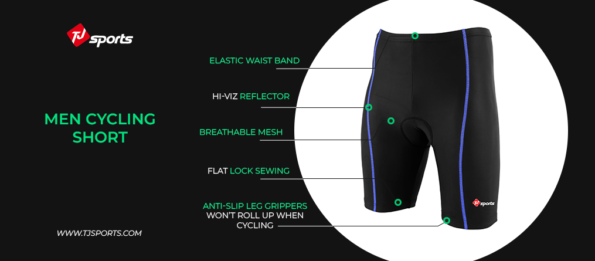
Cycling is hot work, and shorts that trap heat and sweat will wreck a ride no matter how good the chamois is. Look for fabric that wicks moisture away from the skin and dries quickly, with four-way stretch that moves with your pedal stroke instead of fighting it. Ventilated panelling through the seat and inner thigh makes a real difference once the temperature climbs or the ride stretches past the hour mark.
5. Flat Seams That Don’t Fight Back
Bulky seams are one of the most common causes of saddle soreness, and most riders don’t clock it until the damage is done. Every seam that sits against the skin rubs with every single pedal stroke, and over a few hours that adds up fast. Flatlock stitching keeps the inside of the short smooth, so there’s nothing catching against your skin while you’re already under load from the saddle.
6. A Waistband That Holds Without Choking
Get the waistband wrong and you’ll know about it fast — too tight and it digs in and restricts your breathing on hard efforts, too loose and you’re hitching your shorts up every few minutes. What you want is a broad, soft, elasticated band that sits securely at the natural waist and stays there through standing climbs and hard accelerations, without ever feeling like it’s compressing your gut.
7. Leg Grippers That Actually Stay Put
The silicone gripper at the leg opening has one job: stopping the short from creeping up your thigh as you ride. Skip this feature and you’ll end up with fabric bunching at the knee and bare skin making contact with the saddle edge, which is uncomfortable at best. A well-calibrated gripper holds the leg in place all ride long without leaving the deep red welt that overly aggressive grippers are known for.
Getting the Sizing Right
Cycling shorts only work as designed when the size is right. Go too small and the fabric loses its stretch, the chamois gets compressed out of shape, and you end up with pressure points instead of support. Go too big and the pad shifts around under you, undoing all the engineering that went into it. Always check the brand’s specific size chart instead of assuming your usual size will carry over, and measure both waist and hips, since cycling shorts are cut tighter and differently to regular activewear or gym shorts.
Why Padded Shorts Are Worn Without Underwear
If you’re new to cycling, this one throws a lot of people — but padded shorts are designed to be worn with nothing underneath, and it’s not just tradition. The chamois needs direct contact with the skin to move properly with your body and stay correctly positioned against the saddle. Add underwear into the mix and you introduce extra seams and fabric layers, which is exactly what increases chafing risk and can push the pad out of alignment. Going without isn’t a quirk of cycling culture — it’s how the shorts are actually meant to function.
Wrapping It Up
A genuinely comfortable pair of men’s cycling shorts comes down to a handful of things working together: a fit cut for a man’s body, a chamois suited to your riding style, breathable fabric, and the details that matter more than people expect — flat seams, a secure waistband and grippers that hold. Nail the sizing and skip the underwear, and you’ve got a setup built to let you focus on the ride instead of fidgeting in the saddle.
Ready to sort your kit? Have a look through TJ Sports’ range of shorts to find the fit and padding that suits the way you ride.