

The pad inside your cycling shorts — the chamois — is a contoured insert that cushions your sit bones, cuts friction, and manages moisture while you ride. Modern chamois pads are multi-density foam or gel inserts with a smooth, antibacterial surface, shaped to match your anatomy in the riding position. In short, the chamois is the reason you can ride for hours without paying for it the next day.
Yet most riders never think about how that pad actually works — until a long ride in unpadded shorts teaches them the hard way.
What Is a Chamois Pad, Really?
The name is a leftover from cycling’s early days. The first “chamois” really was chamois leather — the soft hide of the chamois goat-antelope — stitched into wool shorts and smeared with cream to reduce chafing. It worked, but leather hardened with sweat, cracked over time, and needed constant care.
Today’s pads keep the name but share nothing else with their leather ancestors. A modern chamois is a synthetic, multi-layer insert, usually 8–15 mm thick, moulded into a three-dimensional shape that mirrors your body in the riding position. It sits between your skin and the saddle, doing three jobs at once: cushioning, friction control, and moisture management.
How Chamois Padding Actually Works
The pad’s job starts with your sit bones — the two bony points (ischial tuberosities) at the base of your pelvis that carry most of your weight on a saddle. On a hard saddle, all your upper-body weight concentrates on two small contact points. That’s the recipe for numbness, soreness, and the dreaded saddle sores.
Here’s how the pad fixes that:
1. Pressure distribution. Multi-density foam spreads your weight across a wider area instead of letting it concentrate on your sit bones. The thickest foam sits exactly where the sit bones land, tapering toward the edges so there’s no harsh ridge digging in when you shift position.
2. Friction reduction. Your legs pump up and down thousands of times per ride, and every pedal stroke is a small sliding movement against the saddle. The pad’s smooth, seamless top layer lets your skin glide rather than drag. Less dragging means less heat, fewer hot spots, and no chafing — the single most common reason new riders cut rides short.
3. Moisture management. Sweat trapped against skin softens it and multiplies friction. Quality pads use moisture-wicking top fabrics — the kind of CoolMax-style fibres you’ll find in performance gear — that pull sweat away from the skin and spread it out so it evaporates. Many pads also carry an antibacterial treatment to keep things fresh on long rides, since a warm, damp pad is exactly where bacteria love to grow.
These three functions work together. Cushioning without moisture control still leaves you chafed; a dry pad without enough density still leaves you bruised. A good chamois balances all three.
What Modern Chamois Pads Are Made Of
Peel back the layers of a quality pad and you’ll find a small piece of engineering:
- Multi-density foam. The core is usually two or three layers of polyurethane foam at different densities. Softer foam cradles, firmer foam supports. Cheap pads use a single slab of uniform foam that bottoms out under your sit bones; quality pads vary the density across the pad’s zones.
- Gel or silicone inserts (on some pads). Some designs add gel zones under the sit bones for extra shock absorption. Gel adds comfort on rough roads but also adds a little weight and can trap heat, so it’s a trade-off.
- Wicking top layer. The surface touching your skin is a smooth knit — often a CoolMax-type moisture-wicking fabric — chosen to glide and to move sweat fast. It should feel silky, not rough or papery.
- Antibacterial finish. Many modern pads are treated to resist bacterial growth and odour. The padded shorts in the TJ Sports range, for example, use an anti-bacterial pad construction — a detail worth having when you’re spending hours in the saddle.
- Seamless or flat-lock construction. The pad is bonded or flat-lock stitched into the short so no seam edge presses into your skin. Run your finger along the pad’s edge: if you feel a hard ridge, that’s a chafe waiting to happen.
A pad can only do its job if it stays exactly where it should, which is why padded shorts use compressive, stretchy fabrics with grippers at the leg openings. A pad that migrates mid-ride is worse than useless.
Why the Pad Works Best Without Underwear
This is the question every new cyclist asks, and the answer is always the same: wear padded cycling shorts commando.
Underwear adds exactly what the pad is engineered to eliminate — seams, bunched fabric, and a cotton layer that traps moisture. Cotton underwear under a chamois creates new friction points and holds sweat against your skin, undoing the pad’s moisture management. The chamois is designed for direct skin contact: smooth, seamless, and shaped to you. Put nothing between you and it.
If modesty or extra coverage is the concern, that’s what the outer short is for. And if you’re riding in cooler weather and want more coverage, padded 3/4 tights give you the same chamois with added leg warmth — a popular option for Australian winter mornings. Our guide to choosing between cycling shorts and 3/4 tights breaks down which length suits which riding.
Chamois Thickness and Distance: What to Look For
Not all pads are built for the same riding. The right pad depends on how long you’re in the saddle:
- Short rides and commuting (under an hour). A thinner, lighter pad is plenty. You don’t need maximum cushioning, and a slimmer pad feels less bulky off the bike.
- Endurance and weekend rides (1–3 hours). This is where multi-density foam earns its keep. Look for thicker padding under the sit bones and a pad long enough to protect you as you shift between the hoods, drops, and tops.
- Long-distance and touring (3+ hours). Maximum density variation, the smoothest top layer you can find, and a pad shaped for your riding position. On rides this long, even a small seam or thin spot becomes a big problem.
One caution: thicker is not automatically better. An overly thick pad can bunch and shift, creating pressure points of its own. The best pad is matched to your distance and your saddle — which matters more than chasing the thickest foam on the shelf.
How to Tell a Good Chamois from a Cheap One
Shopping online, you can’t touch the pad — so look for these quality signals:
- Multi-density construction. The listing should mention varying foam densities or zones, not just “padded”.
- Moisture-wicking, antibacterial top. Terms like CoolMax-style wicking fabric or anti-bacterial treatment signal a pad built for real riding, not decoration.
- Anatomical shaping. The pad should be described as contoured or 3D-moulded, with different widths for men and women (women’s pads are typically wider at the rear to match wider sit-bone spacing).
- Flat seams. Look for seamless or flat-lock stitching around the pad.
- Secure fit in the short. Leg grippers and compressive fabric keep the pad planted. A pad in a loose, baggy short will wander no matter how good the foam is.
The men’s padded cycling shorts and ladies’ padded cycling shorts at TJ Sports check these boxes — CoolMax moisture-wicking, anti-bacterial pads in an anatomically shaped insert, held in place by a compressive fit.
Caring for Your Padded Cycling Shorts
A chamois is the hardest-working part of your cycling kit, and it wears out faster than the rest of the short. Treat it well:
- Wash after every ride. Sweat and bacteria break down foam and finishes. Cold, gentle machine wash is fine.
- Skip the fabric softener. It coats the wicking fibres and kills their moisture-moving ability.
- Air dry, never tumble dry. Heat degrades foam and elastic. Hang your shorts inside-out in the shade.
- Don’t wring the pad. Press water out gently instead of twisting, which can crack foam layers.
- Rotate pairs. If you ride most days, two or three pairs in rotation will each last far longer than one pair ridden daily.
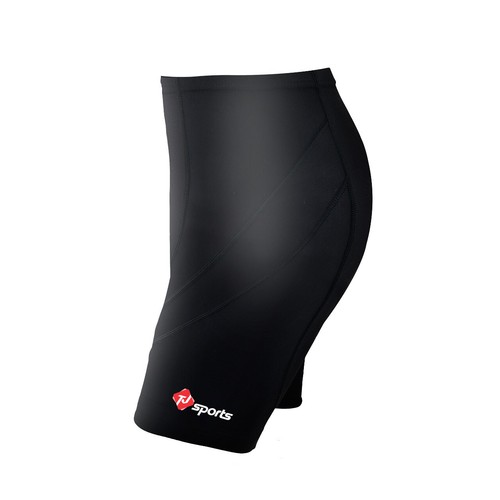
Even with perfect care, pads have a lifespan — typically 6 to 12 months of regular riding. When the foam stays compressed and doesn’t spring back, or seams that never bothered you start to chafe, the pad is done. The short might look fine, but the cushioning is gone.
FAQ
Do you wear underwear with padded cycling shorts?
No. Padded cycling shorts are designed to be worn without underwear. The chamois pad needs direct skin contact to manage friction and moisture; underwear adds seams and traps sweat, which causes the exact chafing the pad is meant to prevent.
How long does a chamois pad last?
With regular riding and proper care, a quality chamois lasts roughly 6 to 12 months. Replace your shorts when the foam no longer springs back after washing, or when you start feeling pressure points and chafing that weren’t there before.
Can you wash padded cycling shorts in the washing machine?
Yes — cold water on a gentle cycle, then air dry. Avoid fabric softener, bleach, and tumble dryers, all of which damage the foam and the moisture-wicking finish.
What’s the difference between men’s and women’s chamois pads?
Women’s pads are generally wider at the rear and shaped differently through the front to match wider sit-bone spacing and different anatomy. Riding in a pad shaped for the wrong anatomy is a fast track to discomfort, so choose the cut designed for you.
Are expensive chamois pads worth it?
For rides under an hour, a basic pad is fine. Once you’re riding longer, pad quality becomes the difference between enjoying the ride and counting down the kilometres. Multi-density foam, a wicking antibacterial top, and anatomical shaping are worth paying for — your sit bones will notice.
The Bottom Line
The chamois is the most important few centimetres of your cycling kit. It distributes pressure off your sit bones, eliminates the friction that causes chafing, and keeps moisture moving so your skin stays intact kilometre after kilometre. Choose a pad matched to your distance, wear it commando, wash it properly — and your saddle stops being the limiting factor on your rides.
Ready to upgrade your comfort? Explore TJ Sports’ padded cycling range — from men’s padded cycling shorts to ladies’ padded options and women’s padded 3/4 tights for cooler rides. And if you’re still deciding on length and fit, our guide on how to choose cycling shorts for long rides is the perfect next read.