
Dry Fit Training Shorts vs Cotton: Which Is Best?
For most training in Australia, dry fit training shorts beat cotton. Dry-fit polyester pulls sweat off your skin and dries quickly, so you stay cooler, lighter and less likely to chafe. Cotton feels soft at first, but it soaks up sweat, stays wet, and gets heavy — exactly what you do not want halfway through a session.
That covers most gym sessions, runs and HIIT workouts. Fabric is not the only comfort factor — fit, stretch, waistband, length and care matter too — and cotton still has a place, just not usually on the training floor. Here is how the two fabrics compare, and how to pick the right pair.
What “Dry Fit” Actually Means
“Dry fit” is a generic term for moisture-wicking synthetic fabric, usually polyester or a polyester blend. It does not repel water like a rain jacket; the fibres and knit are designed to move sweat away from your skin.
Polyester fibres absorb very little water themselves. Instead, tiny channels in the knit pull sweat along the fabric surface — capillary action — and spread it over a larger area, where it evaporates faster. The result is drier skin, a lighter garment, and less of that clammy, clinging feeling as you heat up.
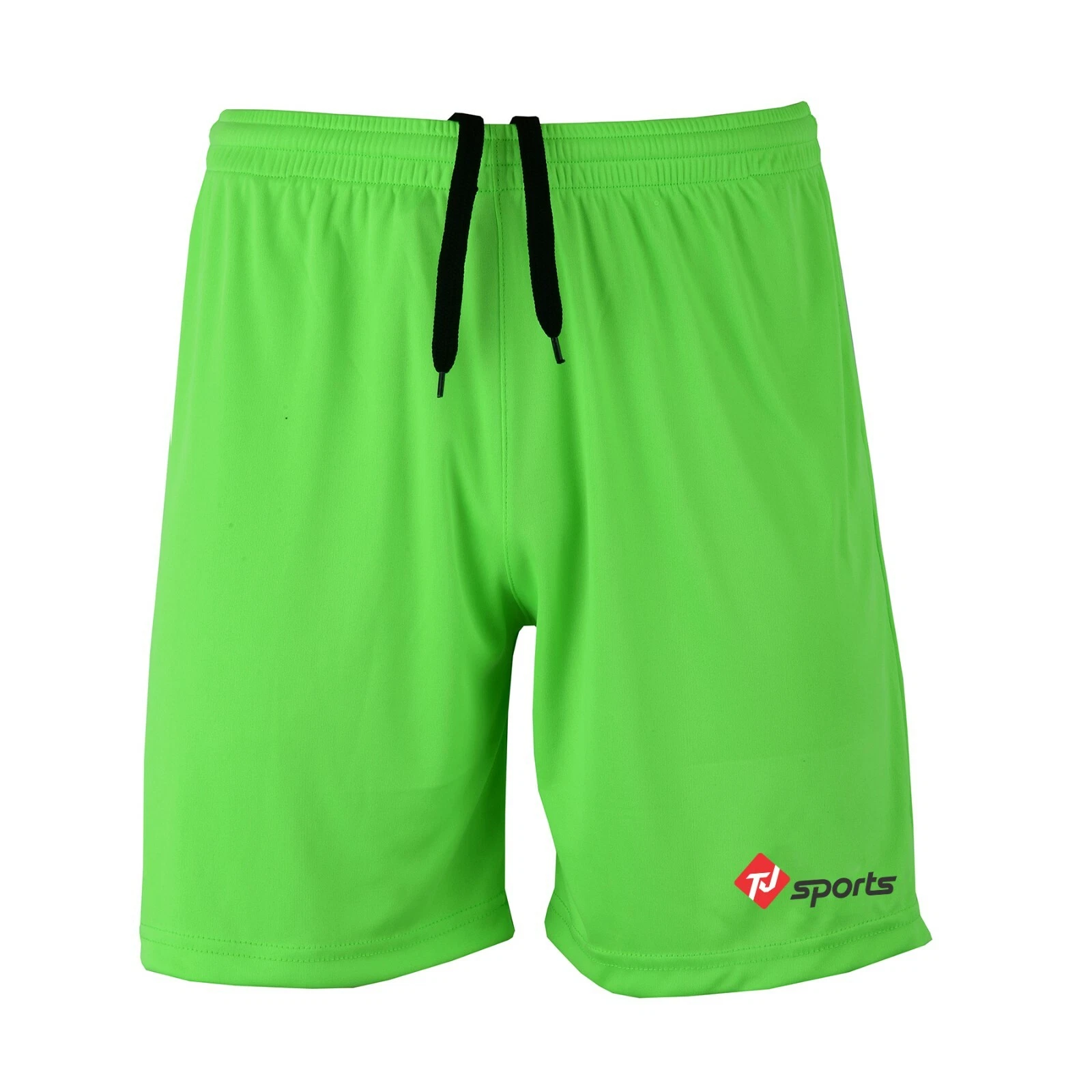
TJ Sports’ Men’s Running Shorts use this approach: interlock polyester with moisture-wicking construction, a stretch waist with draw cords, and a zippered side pocket. Wicking fabric plus a waistband that stays put is the baseline for a good training short.
Dry fit also tends to come with stretch. Four-way stretch polyester moves with you through squats, lunges, sprints and burpees. Cotton, unless blended with elastane, has very little give, which is why cotton shorts can feel restrictive once you start moving properly.
How Cotton Behaves When You Train
Cotton’s appeal is real. It is soft, familiar and comfortable against bare skin when you are not sweating much — fine for a walk, a light warm-up, lounging at home or a low-intensity session in a cool room.
The problem starts when sweat arrives in volume. Cotton fibres are highly absorbent and hold onto moisture rather than moving it on. In practice, that means:
- The shorts get heavier as you sweat, and the extra weight pulls at the waistband.
- Wet fabric clings to your thighs, increasing friction and chafing risk.
- Evaporation slows, because moisture is trapped inside the fibres rather than spread across the surface. You stay damp — chilly in an air-conditioned gym, still sweaty outside.
- Drying time is much longer. A cotton pair tossed in a gym bag stays damp for hours, which is how that stale smell builds up.
None of this makes cotton bad in general — just a poor match for sustained, sweaty training, especially in Australian heat and humidity.
Dry Fit vs Cotton: Head-to-Head
| Feature | Dry fit (polyester) | Cotton |
|---|---|---|
| Sweat handling | Wicks sweat to the surface, dries fast | Absorbs sweat, stays wet |
| Weight during training | Stays light | Gets noticeably heavier |
| Chafing risk | Lower — drier skin, less cling | Higher — wet fabric drags on skin |
| Stretch and movement | Usually four-way stretch | Little stretch unless blended |
| Drying after washing | Fast — often dry within hours | Slow — can take a full day or more |
| Odour over time | Can hold odour if not washed promptly | Less prone to synthetic odour, but damp smell if left wet |
| Softness at rest | Smooth, sometimes slightly slick | Very soft and familiar |
| Care | Cold wash, skip fabric softener | Easy wash, but shrinks if dried hot |
If you remember one row, make it the first: sweat handling is the whole contest, and dry fit wins it easily.

Sweat, Chafing and the Australian Climate
Chafing is the reason many sessions get cut short. The recipe is friction plus moisture plus time, and wet cotton supplies all three — inner thighs are the classic trouble spot, and a heavy, damp short makes every stride more abrasive.
Dry-fit fabric helps on two fronts: drier skin means less friction, and a lighter short that does not sag or bunch stays where it should. A secure waistband matters here too — elastic plus a drawstring tied off, not left loose — and it is one of the features to prioritise in our men’s running shorts buying guide.
The same moisture logic applies beyond shorts. Sweat-softened skin blisters and rubs more easily wherever friction repeats, which is why lifters manage moisture on their hands just as carefully — see our guide on how to prevent blisters when lifting.
In Australian conditions the gap widens. Humidity slows evaporation for every fabric, but cotton starts further behind because it is already saturated. Dry fit at least gives sweat a path out — a difference you will feel outdoors, in a garage gym, or in a packed class.
Durability, Washing and Smell
Dry-fit polyester is generally tougher across repeated training and washing than pure cotton. It resists shrinking, holds its shape better, and does not go baggy at the waist as quickly. Cotton shorts, especially cheaper ones, can shrink in a hot dryer and lose shape after many washes.
Care has one firm rule for dry fit: skip the fabric softener. Softener coats the fibres and blocks the wicking channels that make the fabric work. Wash cold on a gentle cycle and air dry when you can — heat degrades elastic over time.
Odour deserves an honest note. Polyester can hold odour more stubbornly than cotton if sweaty gear sits unwashed, so wash after every sweaty session and do not leave damp shorts in a bag overnight. A damp cotton short left in a bag smells worse, faster — prompt washing wins either way.
Fit Matters as Much as Fabric
A dry-fit short in the wrong size will still disappoint. Two checks matter most: the waistband and the length.
First, the waistband — look for elastic plus a drawstring you can tie securely. Elastic alone tends to creep during sprints, jumps and deep squats, and a loose drawstring is the most avoidable cause of mid-session hitching.
Second, the length. A 5 to 7-inch inseam gives maximum stride freedom for running; a longer, game-length cut gives more coverage for squats, lunges and team sports. If you split your time between running and lifting, a versatile mid-length pair is the sensible middle ground.
TJ Sports’ Men’s Side Stripe Training Shorts are that middle ground: elastic waist with drawstring, in White & Black and Grey & Black, sizes S to XXL. The Men’s Running Shorts cover the same sizes in eight plain colours at $24.99, with Black in S, M and L only.
When Cotton Still Wins
Cotton is not useless — it is just misapplied to hard training. Cotton is the better pick when:
- The session is light: walking, gentle yoga, stretching, or a slow warm-up where you barely sweat.
- Comfort at rest matters more than performance: travelling to and from the gym, coaching from the sideline, or wearing the shorts all day afterwards.
- You have sensitive skin that reacts to synthetics. A cotton or cotton-blend short, or a dry-fit short with a soft liner, may be more comfortable for you personally — skin reactions beat any general rule.
- You want a cheap, soft pair for jobs where performance does not matter.
If you own both, reach for dry fit whenever the session will get properly sweaty. If you can only own one pair, make it dry fit: it handles light days fine, while cotton does not handle hard days at all.
How to Choose Your Next Pair
Use this checklist before you buy:
- Fabric: look for “dry fit”, “moisture-wicking” or “interlock polyester”. If it just says “cotton” with no blend, expect it to get heavy when you sweat.
- Waistband: elastic plus a real drawstring, not elastic alone.
- Stretch: four-way stretch or a polyester-elastane blend for squats and lunges.
- Pocket: a zippered side pocket if you run or train outdoors with keys, a card or a phone.
- Length: shorter for running, longer for lifting and team sport, mid-length if you do both.
Care for it properly — cold wash, no softener, air dry — and it will keep wicking as it did on day one.
Frequently Asked Questions
Are dry fit training shorts better than cotton for running?
Yes, clearly. Running produces sustained sweat, and dry-fit polyester moves it away and dries quickly, while cotton absorbs it, gets heavy and increases chafing. For any run over about 10 to 15 minutes, especially in Australian heat, dry fit wins.
Do dry fit shorts make you sweat more?
No — they do not change how much you sweat, only what happens to it. Because moisture spreads and evaporates faster, you feel drier and cooler. If a short feels hotter, it is usually a fit or ventilation issue, not the wicking itself.
Can you wear cotton shorts to the gym?
You can, and for a light session they will be fine. For a hard session — heavy lifting, HIIT, a long run or a hot class — expect them to get heavy, cling and chafe. If cotton is all you have, bring a towel and change out of damp gear promptly afterwards.
Why do my dry fit shorts smell even after washing?
Polyester can trap odour-causing bacteria, particularly if sweaty gear sits damp before washing. Wash promptly after training, skip fabric softener, and air dry. If odour persists, a sports-specific wash or a vinegar rinse usually clears it.
Should I use fabric softener on dry fit training shorts?
No. Fabric softener coats the fibres and blocks moisture-wicking, which defeats the purpose of the fabric. It can also reduce stretch over time. Wash cold, skip the softener, and air dry when you can.
The Bottom Line
Dry fit wins for training because it solves the main problem training creates: sweat. It stays light, dries fast, stretches with you and reduces chafing, while cotton soaks up sweat, gets heavy and stays damp. Cotton still earns its place for light sessions and sensitive skin — but for the sessions that test you, dry fit is the right tool.
Ready to upgrade? Explore TJ Sports’ Men’s Running Shorts and Men’s Side Stripe Training Shorts — both $24.99, free AU shipping, code TJ10 for 10% off. For more help choosing, start with our men’s running shorts buying guide.